
The product had value.
The challenge was making it visible.
GYST is an AI-powered analytics platform for content creators and their business teams. This project explored how the early product experience could communicate value sooner and reduce hesitation before users connect their data. By analysing the onboarding experience from both a user and business perspective, we identified opportunities to improve clarity, trust, and perceived value.

TL;DR
Problem
New users were asked to commit before clearly understanding the value of the platform.
Solution
Two onboarding paths designed around user readiness — one focused on fast activation, the other on value exploration before commitment.
My Role
UX Strategy
Stakeholder Interviews
Workshop Facilitation
Affinity Mapping
Journey Mapping
User Flows
Wireframing
Prototyping
UX/UI Design
Team
Samantha Wadelius
Valeria Moroz
Affan Alam
Zartab Tahir
Saina Jeng
01
PROBLEM SPACE
The value was there. So what was missing?
GYST provides creators with powerful analytics and business insights, yet accessing that value requires users to complete several steps before they can fully experience the platform. Rather than jumping directly into solutions, we first wanted to understand what might be standing between users and the value GYST had to offer.
To frame the challenge, we focused on four key questions:
Who are we designing for?
Understanding the needs, goals, and expectations of GYST’s target audience helped establish the context for the experience we were evaluating.
What matters to the business?
To design an experience that works for both users and GYST, we first needed to understand the company’s goals, priorities, and expectations.
Where might friction occur?
To improve the experience, we first needed to identify moments that might create hesitation, uncertainty, or unnecessary complexity.
What patterns work?
Understanding how other digital products guide users through complex setup experiences could reveal opportunities to improve clarity, trust, and engagement.
02
PERSONA
GYST serves multiple audience segments, but this persona was identified by the GYST team as a key user group for the platform. Understanding her goals, challenges, and expectations helped provide context for the onboarding experience we were designing.

Jess
Creator-operator · US-based · Top 5% earner
Primary persona
About
Runs a US-based media and education company generating $10–500M annually across sponsorships, digital products, memberships, merch, events, and IP.
Operates across YouTube, TikTok, Instagram, Twitch, Beehiiv, Patreon, and e-commerce, with 5–15 years of content experience and a small, high-leverage team
Goals
Double revenue in ~24 months without doubling workload
Grow recurring income - memberships, subscriptions, retainers
Use data to guide platform, product, and pricing decisions
Callenges
Data is scattered. Revenue data lives across 7+ platforms and internal spreadsheets that constantly break.
Hard money questions. "Which content drives the most revenue per viewer?" takes hours to answer, if at all.
Decisions based on gut. Pricing and sponsorships are negotiated without real profitability data.
Jess goal with GYST
"I want to walk away from a dashboard feeling smart - not intimidated. I need to understand what is happening and what to do next, without hiring another analyst."
03
RESEARCH
The messy middle
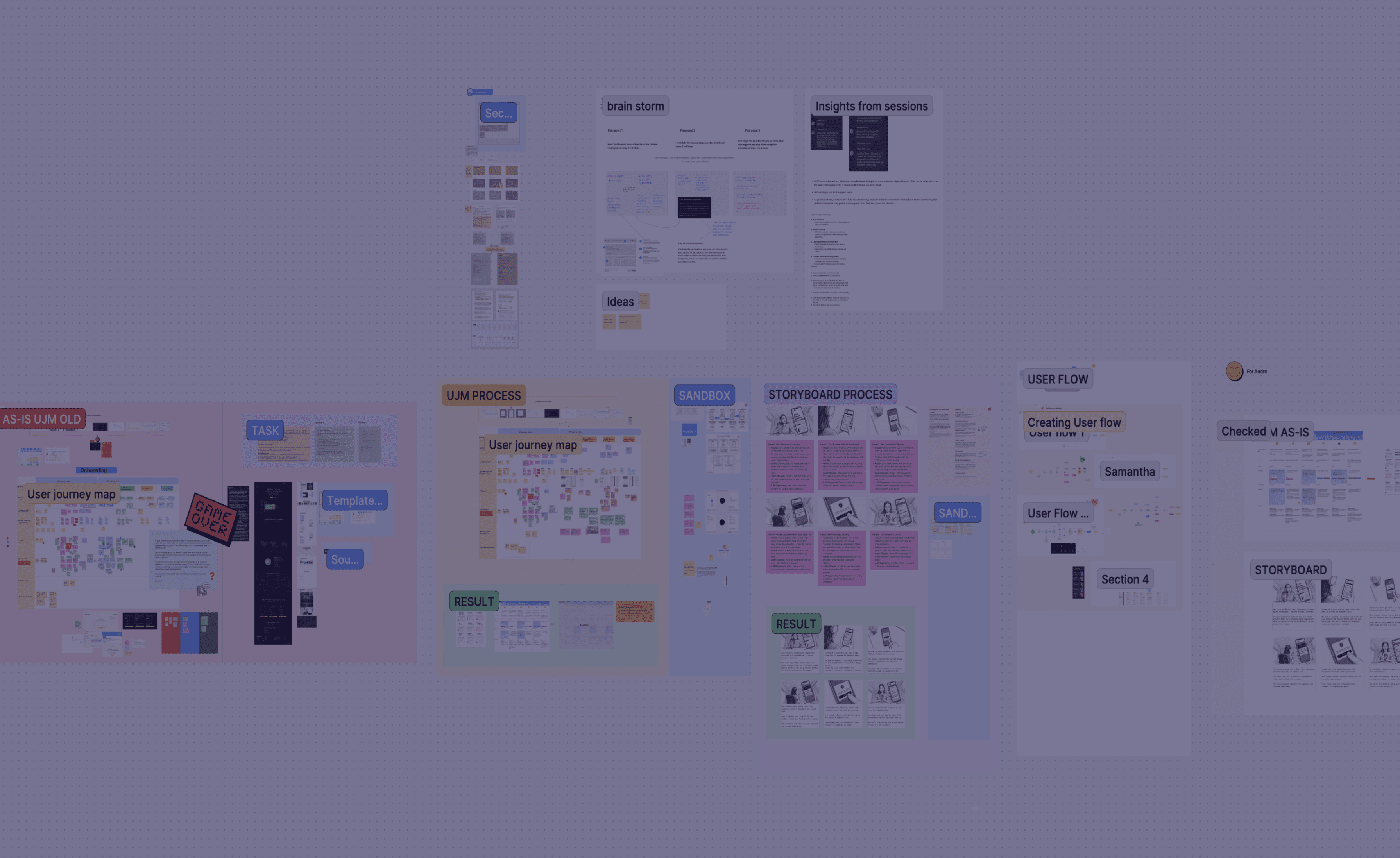
Before defining solutions, we gathered stakeholder input, mapped journeys, explored assumptions, and synthesised findings through collaborative workshops. The result was a shared understanding of where friction might exist and where opportunities could emerge.
04
What we identified
Through stakeholder conversations, journey mapping, and heuristic evaluation, we identified several areas where users may experience hesitation, uncertainty, or reduced trust. These observations helped us identify opportunities to improve the experience.

01
Early commitment before perceived value
Our analysis suggested that users may be asked to connect external platforms before they fully understand the value of GYST. This creates a potential risk of early drop-off, as users are required to commit before seeing clear benefits.

02
The setup process lacked a clear starting point and endpoint.
Journey mapping indicated that the setup experience may lack clear boundaries in terms of start, progress, and completion. Without visible progress indicators, the flow could feel open-ended and increase the likelihood of mid-process abandonment.

03
Uncertainty around data privacy
Heuristic evaluation highlighted that the onboarding flow does not strongly communicate how user data is handled. Because users are asked to connect sensitive financial platforms, this may reduce trust and increase hesitation.

04
Limited navigation control between steps
Our evaluation of the flow suggested that users may lack flexibility to move freely between steps. A one-directional experience could reduce user confidence, especially if they want to review or adjust previous choices.
05
THE OPPORTUNITY
Before a single pixel was designed
The friction points revealed clear opportunities for improvement. Before moving into design, we aligned on four principles that would guide every decision.
01
Demonstrate value before requesting commitment
02
Reduce uncertainty through clear progress
A clear start, a visible end, and step-by-step progress so users always know where they are - and that it will not take long.
03
Build trust through transparency, not fine print
Address data security directly, in plain language, at the exact moment users need reassurance - not buried in a FAQ you will never read.
04
Support user control throughout the journey
Free navigation between steps, skip options at every stage, and the ability to return later - so users move at their own pace, not yours.
06
BEST PRACTICES
What are the current best practices in the space?
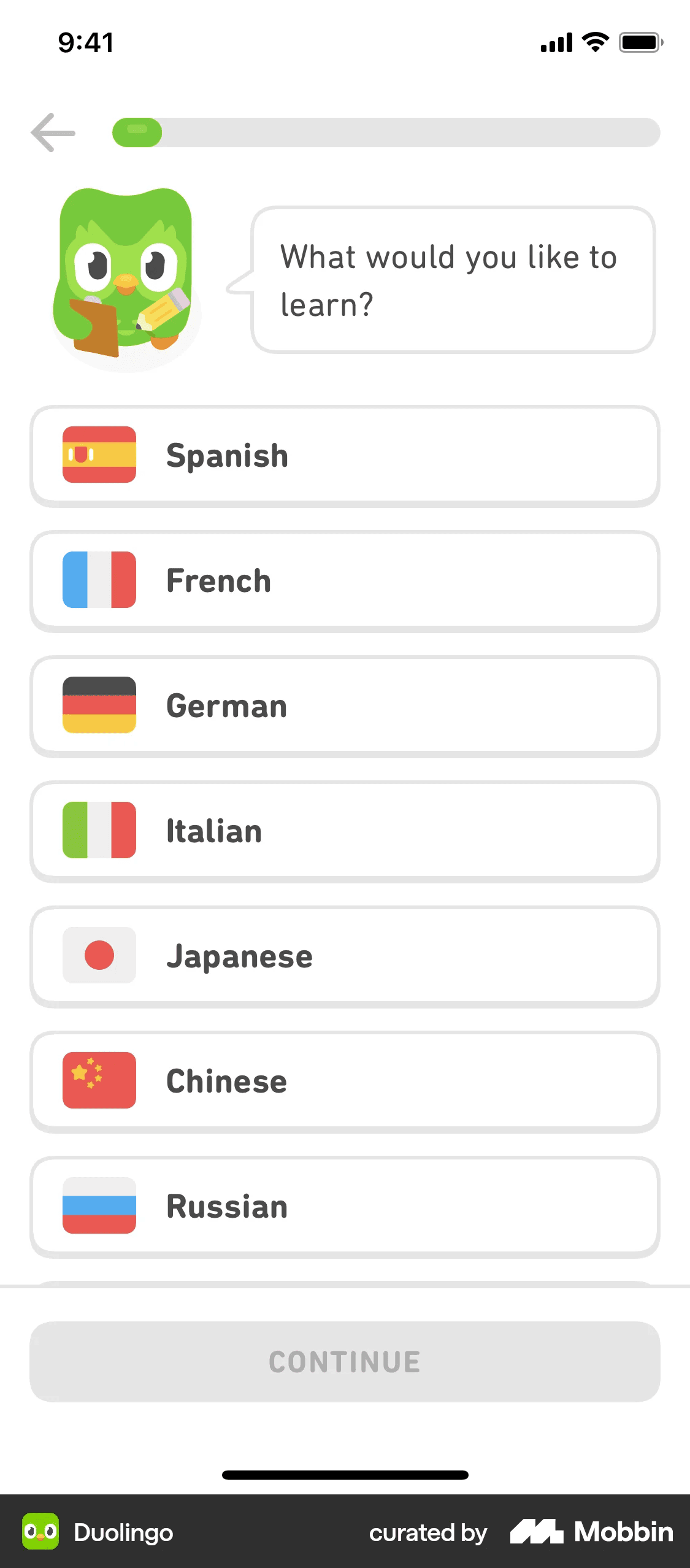
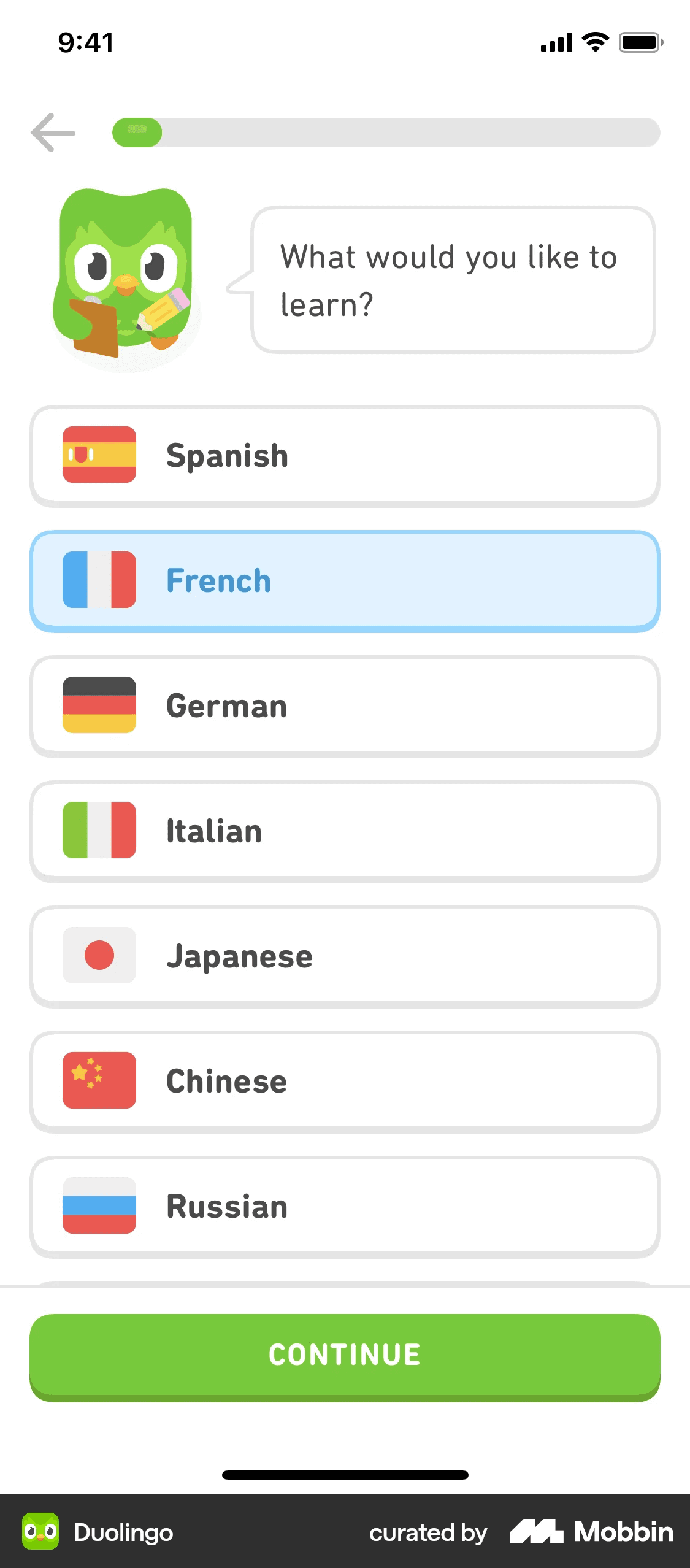
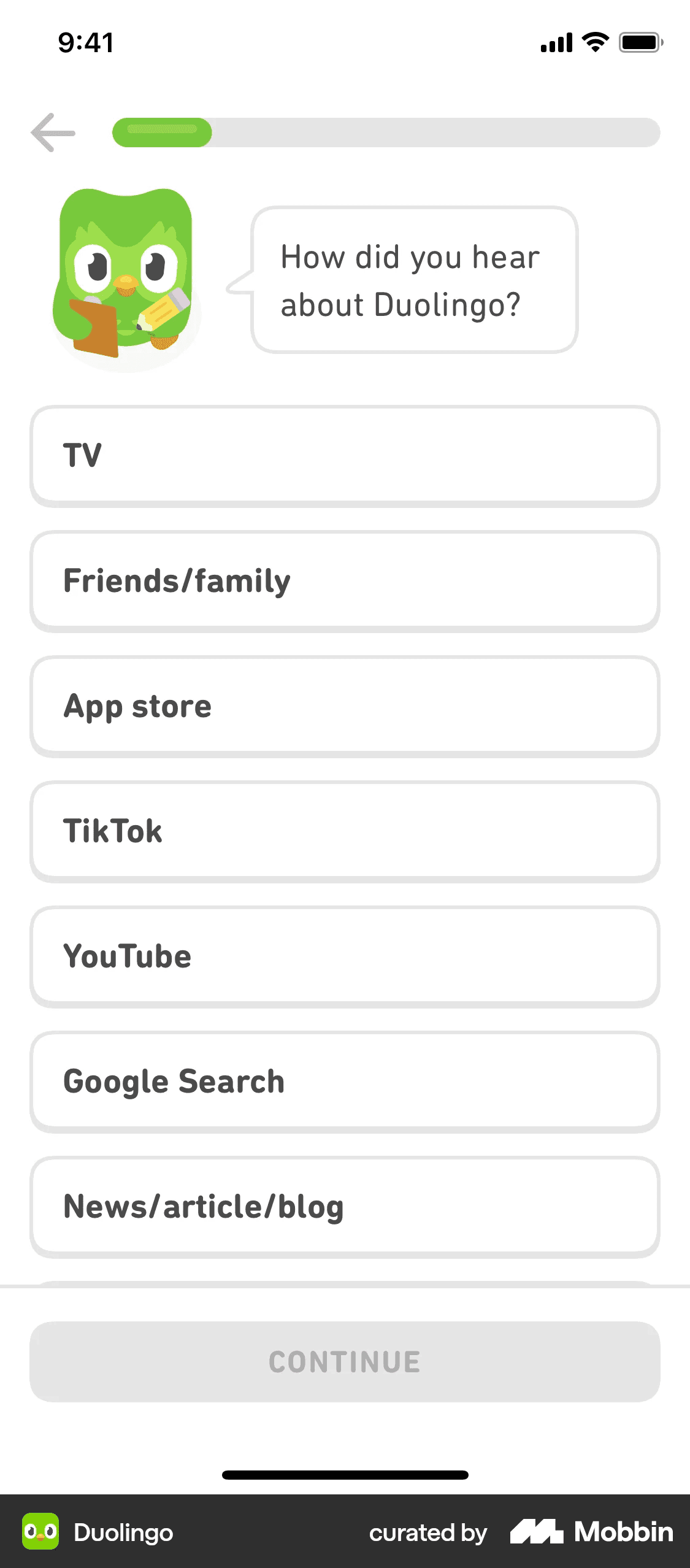
To better understand how successful products guide users through complex setup experiences, we reviewed onboarding flows from digital products known for clarity and ease of use. Several recurring patterns emerged: communicate value early, make progress visible, and keep users in control.
Duolingo became a useful reference because it transforms a potentially complex setup process into a series of small, manageable steps. Users understand what is expected of them, can track their progress, and experience immediate momentum from the first interaction.


07
USER FLOWS
Same onboarding. Different journey.
Not every user arrives with the same level of commitment. While some users are ready to get started immediately, others are still evaluating whether GYST is right for them. To support both needs, we designed two onboarding paths: one focused on fast activation and another focused on value exploration before commitment.
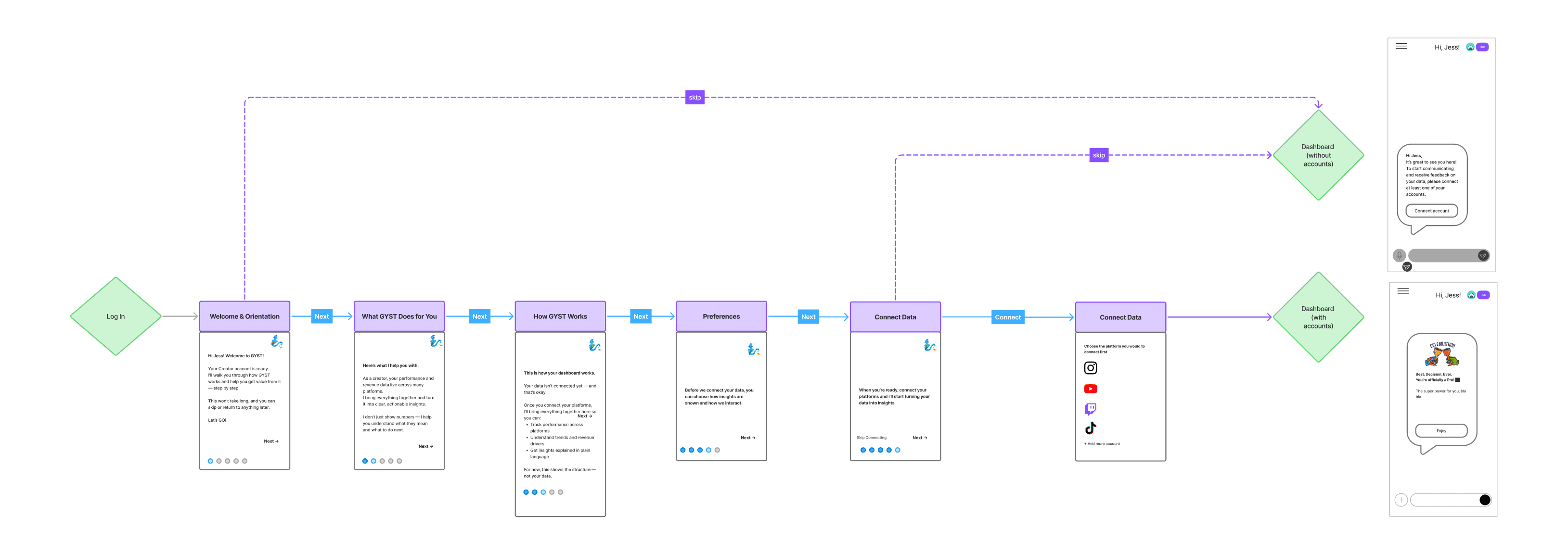
User flow 1
The Subscriber Path
This flow is designed for users who have already committed to the product. The goal is to help them get started quickly by reducing unnecessary friction and guiding them through a lightweight setup process.
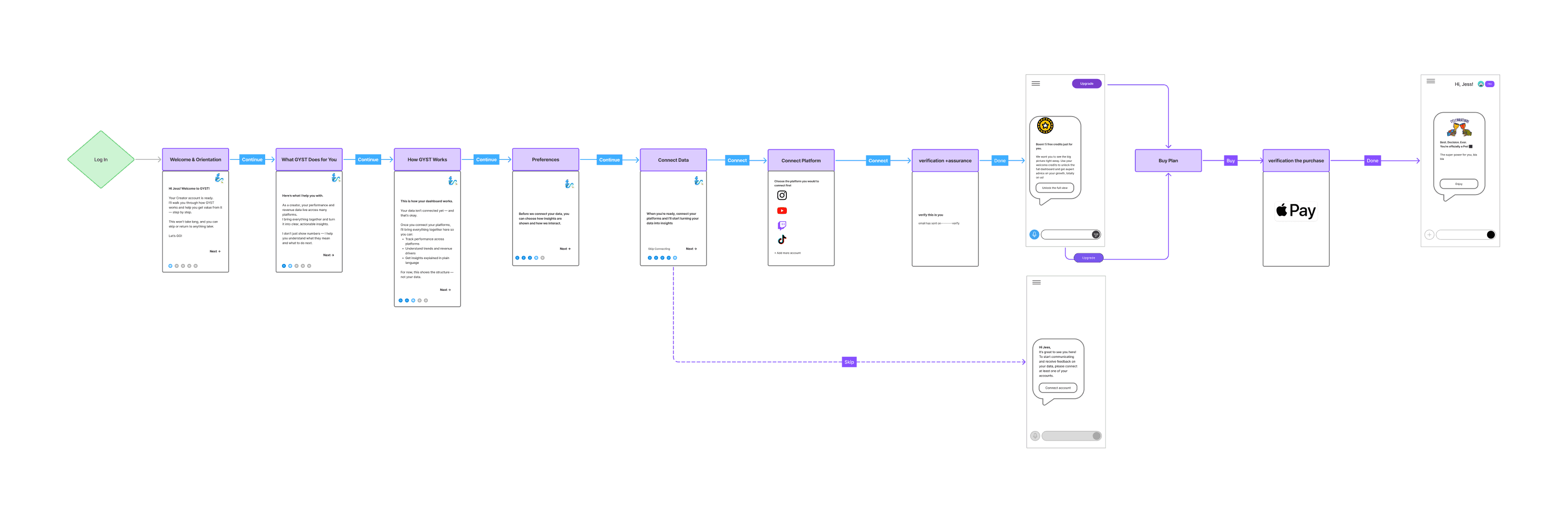
User flow 2
The Explorer Path
Our analysis suggested that some users may benefit from experiencing the product before making a purchasing decision.
This flow is for users who haven’t committed yet and are not being pressured to do so. After completing the same onboarding flow, they receive five free credits and access to a demo dashboard. The demo isn’t watered down—it’s a full preview that allows for free exploration and helps understand the product’s value before commitment.
08
DESIGN DIRECTION
Translating flow into interface design
We took our earlier, thoughtfully developed User Flow 1 and used it as the blueprint for the design direction. We translated it into sequential, structured layouts that guide users clearly and purposefully through the experience, while maintaining GYST’s brand colors and visual identity.

09
Every screen was designed around a simple question: what does the user need to understand, trust, or decide at this moment?
Challenge 01
How to show value
before asking for anything?
Users were asked to connect their platforms before understanding what GYST could do for them. The redesigned flow introduces value first, helping users build confidence before reaching the highest-commitment step.
Challenge 02
The original experience provided little sense of progress or completion. The redesign makes the journey predictable by clearly communicating its scope, structure, and endpoint.
Progress indicators set clear expectations throughout the journey.
A dedicated completion screen provides a meaningful sense of closure.
Multiple completion states ensure users can move forward, even if they choose not to connect their accounts immediately.
Challenge 03
Revenue-generating platforms require a high level of trust. We designed the experience to address this directly, at the right moment, and in the right tone of voice.
Security reassurance is surfaced directly within the connection flow.
Verification messaging explains why safety measures exist, using clear and approachable language.
GYST AI conversational tone builds ambient trust before the high-stakes connection moment
Challenge 04
Users should feel in control of their decisions throughout onboarding. The experience was designed to support exploration, flexibility, and autonomy rather than forcing a single path forward.
Users can move freely between steps using Back and Next navigation.
Skip options are available at key decision points, including platform connection.
Users who postpone account connection can continue exploring the platform without penalty.
10
REFLECTION
Most onboarding experiences are designed to get users through a process. This project challenged us to think differently. The question was not whether users could complete onboarding, but whether they would feel confident enough to continue using the product afterwards.
Throughout the project, we explored why users hesitated during their first interaction with GYST. What initially appeared to be a problem of complexity turned out to be a problem of clarity. The platform offered valuable insights, but users were being asked to commit before they fully understood the value they would receive in return.
One of the most important lessons was that confidence is shaped by small details. Progress indicators, clear explanations, flexible navigation, and reassuring language may seem minor in isolation, but together they influence how users experience a product. Designing for confidence required us to think beyond task completion and focus on reducing uncertainty at every stage of the journey.
The proposed direction was reviewed with GYST stakeholders and aligned with both user needs and business goals. These conversations provided confidence that the concept addressed key concerns around trust, clarity, and activation. However, the solution has not yet been tested with end users. Given more time, the next step would be to evaluate the prototype with creators, validate assumptions, and refine the experience through further iteration.
Ultimately, the project changed how we thought about onboarding. The goal was never to guide users through a sequence of screens. It was to help them reach value with confidence.